Environmental Glance
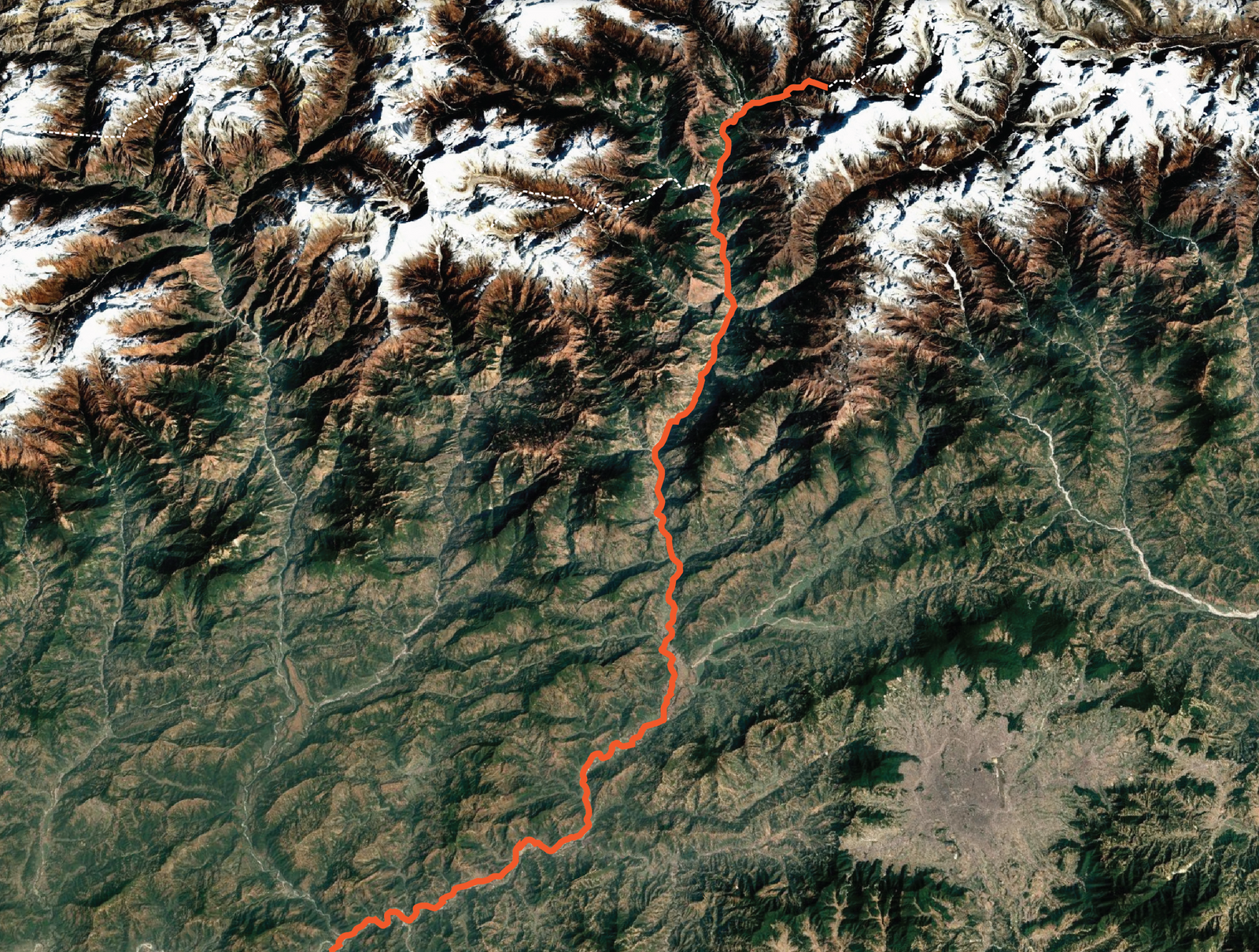 At least 359 people have died, and nearly 1,000 others are reported missing after a flash flood struck a mountainous area in Nepal and the Tibet region of China on Aug. 26.
The working theory is that a glacial collapse produced the flood that washed away buildings, cars and people with incredible speed and force, scientists told USA TODAY. The U.S. Geological Survey said a glacial collapse, in which part of a glacier breaks away, produced a seismic event at about 8:37 a.m. local time.
The collAs emergency officials continue to search for the dead and missing after a horrific Himalayan river flood, scientists race to assess the risk of even more flooding and piece together how it all began. It could take days or weeks to fully understand the event. Here's what we know so far:
See how a glacier collapse caused a deadly flood in Nepal and Tibet
Fast-growing Hawk Fire near Reno triggers mass evacuation orders
 Afast-growing wildfire forced over 42,000 people to evacuate near Reno, Nevada, over the weekend, while more than 40,000 others remained under evacuation warnings.
The blaze, dubbed the Hawk Fire, started northwest of Reno on the morning of Aug. 22 and quickly grew to more than 15,000 acres by the afternoon of Aug. 23, according to the National Interagency Fire Center. Firefighters expect the fire to spread to the northeast, "impacting multiple major thoroughfares, structures, businesses" and infrastructure in Stead, Nevada, the fire center posted in an update.
Nevada Gov. Joe Lombardo declared an emergency for Washoe County, which includes Reno and the northeast portion of Lake Tahoe. "This is an active and rapidly evolving situation, and I urge everyone in the affected areas to remain vigilant and follow the direction of local officials," said Lombardo in a statement shared on social media.
The Hawk fire had burned an undetermined number of structures, according to Shane Akerson, a battalion chief with the Truckee Meadows Fire Protection District during an Aug. 23 briefing. The fire, which started in the Peavine Peak area of the Humboldt-Toiyabe National Forest, was human-caused and the source of the ignition remains under active investigation, Akerson said. At least six people had been injured, including three civilians and three first responders.
Four dead as historic rainfall hits Japan, triggering landslides and power outages
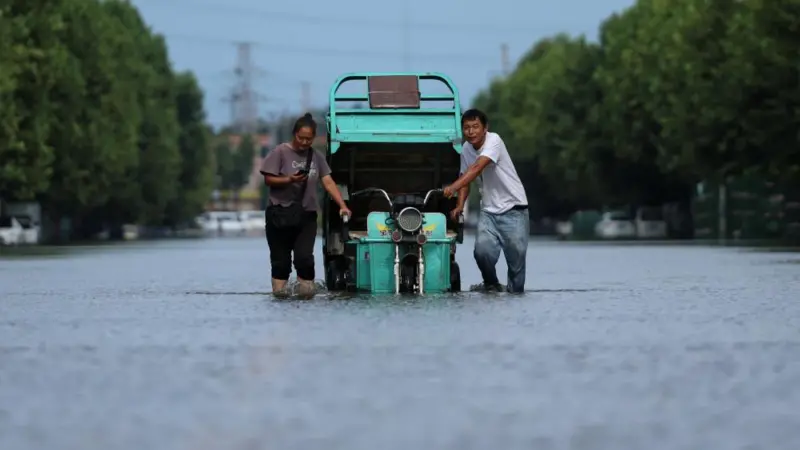 Today's floods come after a week of storms in the region.
Japan, China and the Philippines were hit by back-to-back storms – Dolphin, Chan-Hom and Peilou – which are churning across the region at the same time.
Earlier this week, Chinese authorities evacuated more than a million people from their homes as Dolphin, the strongest typhoon to hit China so far this year, made landfall in thMore...e country's east.
On Friday, Japan's Meteorological Agency said the deluge was brought by warm, humid air flowing into eastern Japan that combined with cold air above to make atmospheric conditions extremely unstable.
Around 7,000 people were left stranded overnight at Narita, one of Tokyo's two main airports, as the rain cut transport services linking to the airport on Thursday.
All flights are scheduled to operate normally on Friday, an airport spokesperson says. National flag carrier Japan Airlines says some of its flights may be delayed but it does not expect any cancellations.
Famed tourist destinations evacuated as wildfire threatens California’s Big Sur
 Evacuations have been ordered for areas along California’s famous Big Sur coast as a wildfire burns in the nearby steep, rugged mountains.
The Timber fire in Monterey county started on Sunday and grew to nearly 3,000 acres by Tuesday evening, according to Cal Fire, the state’s fire agency. Nearly 500 fire personnel had been assigned to the fire in the Los Padres national forest.
The evacuations have affected famed tourist destinations such as the Nepenthe restaurant, the Henry Miller Memorial Library and the Alila Ventana resort, as well as state parks during the region’s busiest season. Part of the Pacific Coast Highway in Monterey county was closed for non-residents, and officials urged visitors to avoid the area entirely.
Firefighters worked to build containment lines along the Highway 1 corridor, Cal Fire said on Monday, and have boxed in 5% of the blaze. Ground crews are working to access difficult terrain, the agency said, but the fire is moving slowly, burning primarily along the ground through grass, brush and oak woodland and has not moved into the tree tops.
Magnitude 7.4 quake rocks western Colombia, killing at least 111 people
A powerful 7.4 magnitude earthquake struck western Colombia on Monday, killing at least 111 people, damaging hundreds of buildings and leaving many trapped under debris while their loved ones and rescue workers searched through rubble.
Search teams and civilians picked through the remains of destroyed buildings in the country’s third-largest city, Cali, passing large pieces of concrete and other rubble down a long line of volunteers.
“Our building has basically been left in ruins, and the building next to ours? Completely collapsed,” said Álvaro López, who cradled his dog as he watched the search. The desperate scene recalled the searches still ongoing in neighboring Venezuela weeks after that country was devastated by two powerful earthquakes.
Besides Cali, the quake ravaged cities across western Colombia, including Pereira, Quibdo and Manizales, and was felt in neighboring Ecuador and Panama. The epicenter was in San Jose del Palmar, a community of about 4,800 people in the Choco region about 250 miles (400 kilometers) west of Bogota, the U.S. Geological Survey said.
Lake Mead plummets to historic low water level as Colorado River struggles
 Lake Mead, the largest reservoir in the United States, has plummeted to its lowest water level since it was filled some 90 years ago, the latest sign of a deepening water crisis in the American west.
Water levels at the reservoir, which straddles the Arizona-Nevada border outside Las Vegas, hit 1,040.4ft (317.1 meters) above sea level on Friday, according to federal data. That’s just below the record set on 28 July 2022, according to the US Bureau of Reclamation.
The reservoir is a critical storage system on Colorado River, a massive waterway that supBut the Colorado River basin is facing enormous pressure due to a combination of overuse, prolonged drought and extreme heat, and a lack of snowmelt to replenish the river. Lake Powell, the second major reservoir on the Colorado River, is also at historic low levels.
Crews building Trump border wall in drought-hit New Mexico ordered to stop drilling wells
 Construction crews building a border wall in New Mexico were ordered to stop drilling new wells after ranchers said that pumping groundwater to produce concrete could threaten their livestock amid a severe drought.
The order comes as crews across the southern border race to complete one of Donald Trump’s key domestic priorities – barriers that span four states and received over $46bn in federal funding. Controversies have sprouted up in Texas and California, and border-town residents and environmentalists have reported a wide variety of issues with construction.
At a public meeting in July, ranchers said they were noticing unmonitored tapping of border aquifers that threatened the water for those nearby.
“It would put us in an immediate catastrophe and having to do something with our livestock. I mean, it could potentially put some people out of business, us included,” said Russell Johnson, a cattle rancher whose property runs along the border.
More Articles...
- Washington fires force thousands of evacuations. See map
- Heatwave scorching western US ups risk of hazardous fire conditions
- It’s time to prosecute climate crimes – with laws that already exist
- Green grant cancellations were ‘based solely’ on states’ political affiliation, Trump administration says in court
Page 2 of 202