TV News LIES

Wednesday, Aug 12th

Last update07:36:38 AM GMT

You are here All News At a Glance Editorial Glance

We are US civil rights lawyers. Trump’s policies have driven us to seek justice internationally

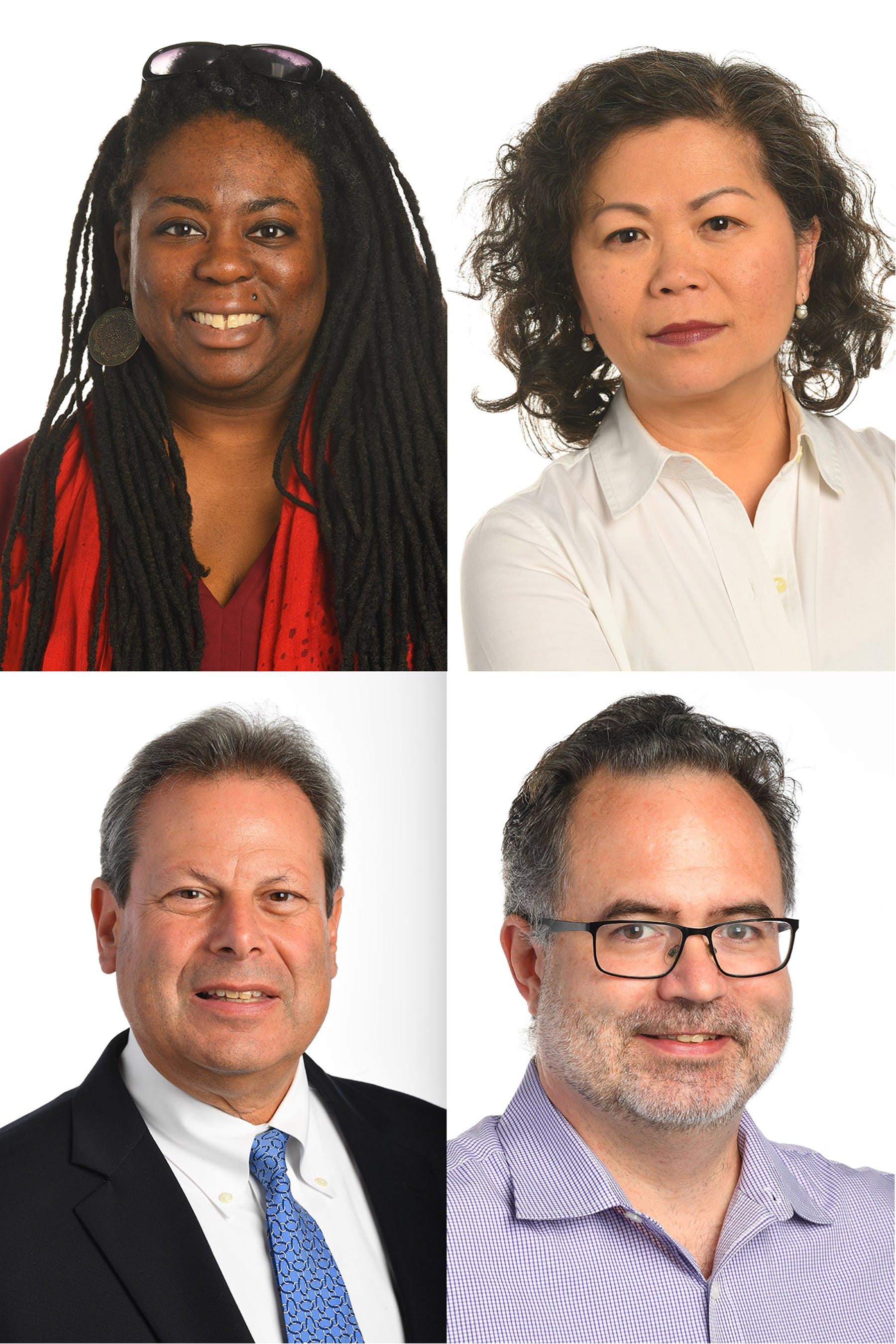
US civil rights lawyers speak outWe are constitutional law, civil rights and human rights scholars and practitioners who have spent decades litigating government abuse cases in the United States. Despite the US legal system’s flaws, our work – from securing a record civil settlement for George Floyd’s family to holding Bolivia’s ex-president accountable in US federal court for the massacre of Indigenous protesters – has demonstrated that US courts can rein in state power and provide a path to accountability. But this pathway is narrowing.

As Donald Trump attacks the courts, weaponizes the Department of Justice, and targets attorneys who challenge his administration, we have been forced to seek justice beyond our borders.

Earlier this year, we requested a thematic hearing at the Inter-American Commission on Human Rights (IACHR) on the United States’s violent suppression of protests against federal immigration policies. Never before had the commission granted such a hearing, but the extraordinary nature of the Trump administration’s actions – including allegations of excessive and lethal force against peaceful protesters, attacks on journalists and legal observers, and racial profiling and surveillance – warrants international scrutiny. On 4 August, the commission will hold that hearing.

The IACHR is unfamiliar to most Americans. Together with the inter-American court of human rights, the commission is the bedrock of the hemisphere’s human rights system. For decades, it has served as a safeguard against authoritarianism and state repression in the region, providing an avenue for victims when domestic institutions have failed. While the United States claims it is not bound by the inter-American system’s norms, it remains subject to the commission’s oversight under the American declaration of the rights and duties of man. Condemnation by the commission has directly led to policy changes by countries, including the United States.

More...


Simon Tisdall: Decades on from the US’s disastrous campaign in Afghanistan, Trump is making all the same mistakes

Trump's mistakes were made in AfghanistanIt’s five years this month since the chaotic retreat of US forces from Kabul. The Nato-backed invasion and occupation of Afghanistan, launched after the 11 September 2001 terrorist attacks on New York City and Washington DC, is now widely regarded as a failure.

It cost the lives of more than 2,400 US and 450 British troops, and tens of thousands of civilians (the exact number is unknown). Although al-Qaida terrorists were routed, their Taliban hosts reimposed repressive, misogynistic Islamist rule after regaining power in 2021. Afghanistan became a byword for ill-considered western interventionism and nation-building. It was the archetypal “forever war”, a phrase first coined during Vietnam.

If this cautionary tale had any lasting value, it was as a deterrent to politicians and generals tempted to rashly embark on open-ended conflicts without just cause, defined, achievable aims, and an exit strategy. Dismayingly, the forever war lesson had to be learned all over again in Iraq, which the US and UK invaded in 2003 and departed, having caused huge harm for scant benefit, in 2011. “Never again!” was the passionate cry at the time and since. And yet, it seems, the same disastrous pattern is now repeating after Donald Trump’s incomprehensibly foolish decision to attack Iran. A war he termed a “little excursion” is entering its sixth month and has been escalating rapidly. It, too, has a forever feel.

That this nightmare is happening again defies all reason. How can it be? Immediate causes of the war aside, answers may be found in persistent US exaggerations and misconceptions about the level and extent of external threats, mixed up with political dishonesty, national hubris, naivety and misplaced idealism.

Recalling the harrowing US experience in Afghanistan, Carter Malkasian, a National War College professor who served as a civilian adviser to US forces in Helmand and Kabul, suggests the basic premise for keeping troops in Afghanistan for 20 years – a belief the country would otherwise revert to being a safe haven for international terrorism – was fatally flawed.

More...

The Guardian view on Israel and Gaza: the threat of further humanitarian catastrophe

 Guardian view on Israel and Gaza“He’ll do whatever I want him to do,” said Donald Trump, addressing his discussions with Benjamin Netanyahu over their illegal war on Iran. The US president said on Friday that he was making his final determination on a deal – of sorts – with Tehran. As chief ally, funder and arms supplier for Israel, the US can rein in its prime minister.

But with his hands tied on Iran, Mr Netanyahu seems bent on rekindling war elsewhere. Israel’s brutal escalation in Lebanon may be an attempt to gain ground while it can, or perhaps to destabilise the Iran peace initiative. The prospects for Gaza are grimmer.

As Mr Trump talks up a new peace deal in the Middle East, Mr Netanyahu is trashing Mr Trump’s last effort. Israel this week killed another Hamas military chief, but this war has failed in its stated aim of destroying the group, while visiting untold horror on civilians.

Israeli forces have expanded far beyond the half of territory they agreed to hold, attack Palestinians in an undefined zone around their positions and carry out airstrikes deeper into Gaza. Yet Nickolay Mladenov, the top diplomat for the Trump-appointed Board of Peace, has blamed Hamas for the stalling of the purported ceasefire.

Now Mr Netanyahu says he has ordered the military to take control of 70% of Gaza. That would force more than 2 million Palestinians into less than a third of what was already overcrowded territory.

More...

The Guardian view on Cuba: Trump says he can do ‘anything I want’ to the island. It doesn’t belong to him

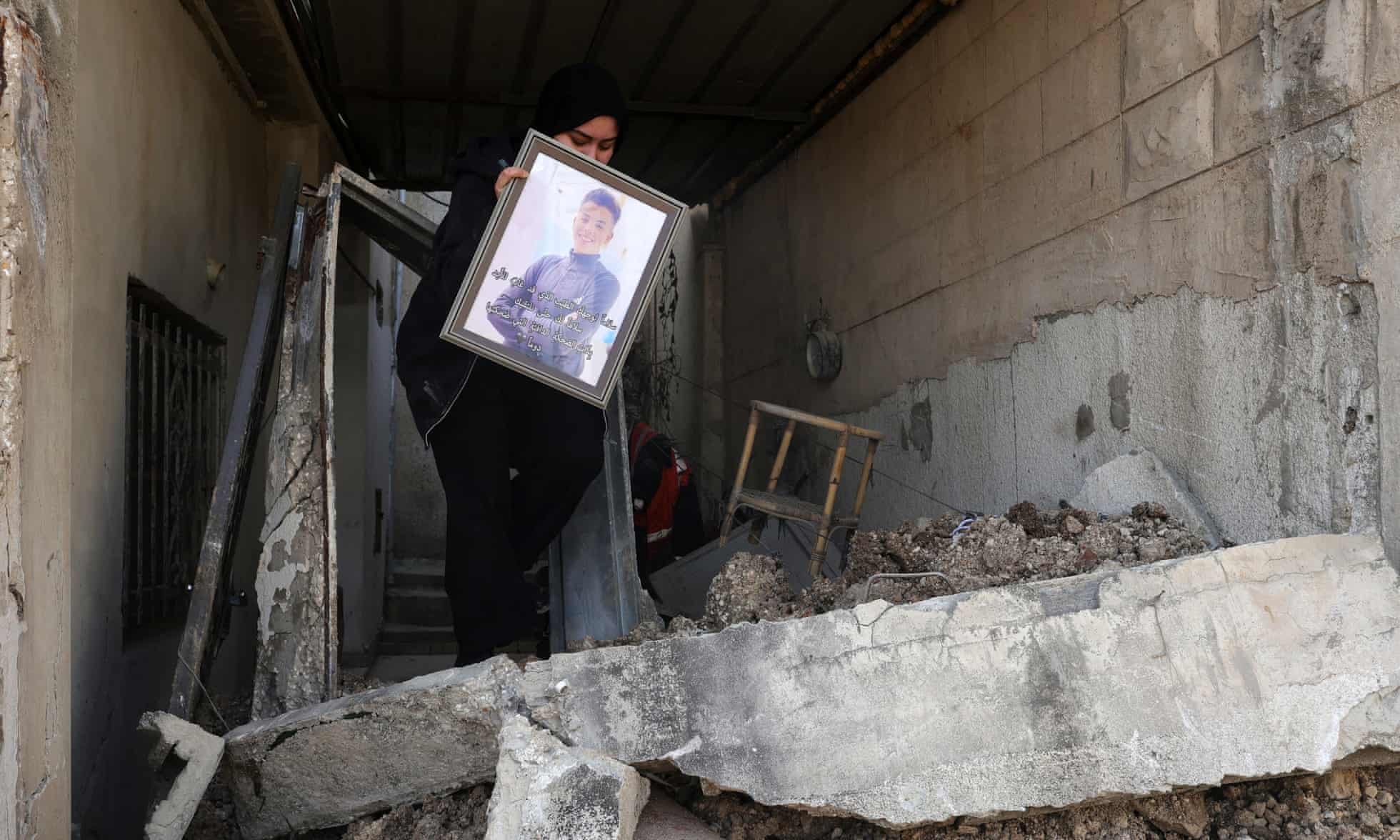
Raul CastroWhile the world watched the pomp of Donald Trump’s trip to Beijing, the US was turning up the pressure thousands of miles away. Its oil blockade has plunged Cuba into a humanitarian crisis, sparking nationwide blackouts that have prompted rare protests, closing schools and universities and leaving hospitals battling to treat patients.

Surveillance flights are circling. US media reported this weekend that federal prosecutors are preparing an indictment for Raúl Castro, the 94-year-old former president and brother of Fidel. Mr Trump has casually observed, while bragging about the kidnapping of Venezuela’s then leader Nicolás Maduro in January, that “Cuba is next”.

A military assault on Havana would be vastly more fraught for the US – even without the war on Iran – and disastrous for Cubans. Washington hopes that threats and privation will be sufficient. UN experts warn that the blockade is unlawful, puts human rights at risk and may amount to collective punishment. The government admitted on Wednesday that fuel oil had run out.

Tourism has collapsed. The Canadian mining company Sherritt pulled out of a joint venture and countries have axed their contracts for Cuban doctors – a vital source of income for the island, and trained medical staff for others. Havana may hope that it can stagger on. But Mr Trump is not patient.

More...

Peter Beinart: As Jews celebrate Purim, let us end the slaughter in Gaza committed in our name

Beinart editorial

Later this month, on the holiday of Purim, Jewish people will dress in silly costumes, eat triangular pastries, and listen to an ancient story about attempted genocide. What we notice, and don’t notice, about that story says a lot about what we notice, and don’t notice, in Israel and Palestine.

The tale comes from the book of Esther. It begins with a dissolute Persian king. He hosts a banquet, gets drunk, orders his queen to “display her beauty” to the revelers, and, when she refuses, banishes her from the throne. As her replacement he chooses Esther, a beautiful young maiden who, unbeknownst to him, is a Jew. Then he makes a calamitous personnel decision: he selects Haman, a pathological Jew-hater, to be his right-hand man. The stage is now set for an epic clash.

Haman persuades the king to sign an edict exterminating the Jews. Esther’s uncle, Mordechai, hears the news and sends word that she must save her people. Although protesting puts her own life at risk, Esther appeals to the king and, through a series of daring maneuvers, turns him against Haman. Haman is hanged. Mordechai takes his job. Good triumphs over evil.

More...

The Bombs of August : In Remembrance of Hiroshima and Nagasaki

Enola Gay crewOn Monday, August 6, 1945, after six months of intense firebombing of 67 other Japanese cities, the United States  dropped a nuclear weapon nicknamed "Little Boy" on the city of Hiroshima , Japan.

This attack was followed on August 9 by the detonation of the "Fat Man" nuclear bomb over the Japanese city of Nagasaki. To date, these are the only attacks with nuclear weapons in the history of warfare.

*  *  *

When the bombs were dropped I was very happy. The war would be over now, they said, and I was very happy. The boys would be coming home very soon they said, and I was very happy. We showed ‘em, they said, and I was very happy. They told us that the cities of Hiroshima and Nagasaki had been destroyed, and I was very happy. But in August of 1945 I was only ten years old, and I was very, very happy.

The crew of the B-29 was so young and heroic, and in the photo they also looked very happy.  For some reason, I clearly remember the name of the pilot, Paul Tibbets. Of course I remember the name of the plane, the Enola Gay.  And oh yes, I remember the name of the bomb.  It was called Little Boy. That made me smile.

I was so proud to be an American that day because we had done something so remarkable. They said we were the first. We were Americans. We were powerful.  But they didn’t say that Little Boy had killed 66,000 people with its huge fireball that fateful day in August. They didn’t say that Hiroshima was not a military target, but a city filled with men and women and children and animals who had no idea they were about to die so horribly.  When you’re ten, they don’t always tell you everything.

I don’t think anyone made as big a fuss over the second plane, or its crew. Are they even in the Smithsonian?  Second best doesn’t count, I suppose, but I remember wondering why they had done it again. Wouldn’t the war be over anyway, like they said? Weren’t the boys coming home very soon? Hadn’t they already showed ‘em how strong we were in Hiroshima? So they told me that the second bomb was called Fat Man, and that made me smile.

So I was even prouder to be an American that second day. They said this would be the end for sure, and after all, these people were the enemy and you kill the enemy when you can. But they didn’t tell me that Fat Boy had killed 39,000 human beings with another fireball on another day in August. They didn’t tell me that Nagasaki was not a military target, but a city filled with…well, you know. They didn’t even tell me that there were horses trapped in the flames of Nagasaki, because I loved horses and that would have made me sad.

But when you’re ten, they don’t tell you everything.

Today I’m no longer ten, and I am no longer happy when bombs fall. And the names Fat Man and Little Boy no longer make me smile because I now know the devastation and horror of burned bodies and twisted metal that result from mushroom clouds. I am ashamed that on this day Americans don’t stop to remember what was done. And today I am horrified that my government has just killed hundreds of thousands of defenseless Iraqi men and women and children and animals who were not the enemy they were made out to be.

And  today I am angry and heartsick that my leaders waged years of war against people in Vietnam, Iraq, Syria, and Afghanistan for no earthly good reason at all - and that, once again, the silence of the people is deafening.

And today I am enraged at the drones that my government fires with impunity at 'suspected militants' in nations with whom we are not at war.  I am horrified that there is hardly a blink by the American public as these devastating computerized weapons kill hundreds of innocent people who are so easily dismissed as collateral damage. 

And today, I am so very sad that many young people don’t even know about the Enola Gay and the mission of its crew. But I am so terribly ashamed that the wars we continue to wage and finance are so coldly divorced from the reality of death and pain.

After all, those who make war know better than to tell us about the thousands of civilians who die at their hands.  They know better than to show us the devastation they cause every day.. They withhold the true numbers of our own military who die each day and hide the terrible wounds of those who survive.. War is surgical and sanitized, they tell us, and a very effective way to liberate people. They speak to us as if we all were ten.

Today, I am so painfully saddened by the many Americans continue to cheer the bombs of war. I cannot understand those who still buy into the mythical glory of killing and being killed in the name of democracy. Hiroshima and Nagasaki have all but been forgotten by so many. I know, - it was another war in another time, and it is far more patriotic to remember Pearl Harbor than to imagine the horror of the bombs of August.

Today, I am very far away from being ten, and trust me - I am not smiling. Today, I mourn new killing fields made bloody in my name. I mourn a nation brought to its knees by corporate greed and polarized by misinformation and political debauchery. I mourn for the millions who cannot rise above low paying jobs and for those whose future is held hostage by student loans. I mourn for the countless families who lost their homes to predatory bankers. And I mourn for a nation that once offered such hope to so many - and now struggles to survive at all.

How sad is that?


The Bombs of August : In Remembrance of Hiroshima and Nagasaki

Atomic bombing of HiroshimaOn Monday, August 6, 1945, after six months of intense firebombing of 67 other Japanese cities, the United States  dropped a nuclear weapon nicknamed "Little Boy" on the city of Hiroshima , Japan.  This attack was followed on August 9 by the detonation of the "Fat Man" nuclear bomb over the Japanese city of Nagasaki. To date, these are the only attacks with nuclear weapons in the history of warfare.

In Remembrance of Hiroshima and Nagasaki

When the bombs were dropped I was very happy. The war would be over now, they said, and I was very happy. The boys would be coming home very soon they said, and I was very happy. We showed ‘em, they said, and I was very happy. They told us that the cities of Hiroshima and Nagasaki had been destroyed, and I was very happy. But in August of 1945 I was only ten years old, and I was very, very happy.

The crew of the B-29 was so young and heroic, and in the photo they also looked very happy.  For some reason, I clearly remember the name of the pilot, Paul Tibbets. Of course I remember the name of the plane, the Enola Gay.  And oh yes, I remember the name of the bomb.  It was called Little Boy. That made me smile.

I was so proud to be an American that day because we had done something so remarkable. They said we were the first. We were Americans. We were powerful.  But they didn’t say that Little Boy had killed 66,000 people with its huge fireball that fateful day in August. They didn’t say that Hiroshima was not a military target, but a city filled with men and women and children and animals who had no idea they were about to die so horribly.  When you’re ten, they don’t always tell you everything.

I don’t think anyone made as big a fuss over the second plane, or its crew. Are they even in the Smithsonian?  Second best doesn’t count, I suppose, but I remember wondering why they had done it again. Wouldn’t the war be over anyway, like they said? Weren’t the boys coming home very soon? Hadn’t they already showed ‘em how strong we were in Hiroshima? So they told me that the second bomb was called Fat Man, and that made me smile.

So I was even prouder to be an American that second day. They said this would be the end for sure, and after all, these people were the enemy and you kill the enemy when you can. But they didn’t tell me that Fat Boy had killed 39,000 human beings with another fireball on another day in August. They didn’t tell me that Nagasaki was not a military target, but a city filled with…well, you know. They didn’t even tell me that there were horses trapped in the flames of Nagasaki, because I loved horses and that would have made me sad.

But when you’re ten, they don’t tell you everything.

Read more...

Page 1 of 148

  • «
  •  Start 
  •  Prev 
  •  1 
  •  2 
  •  3 
  •  4 
  •  5 
  •  6 
  •  7 
  •  8 
  •  9 
  •  10 
  •  Next 
  •  End 
  • »
 
America's # 1 Enemy
Tee Shirt
& Help Support TvNewsLIES.org!
TVNL Tee Shirt
 
TVNL TOTE BAG
Conserve our Planet
& Help Support TvNewsLIES.org!
 
Get your 9/11 & Media
Deception Dollars
& Help Support TvNewsLIES.org!
 
The Loaded Deck
The First & the Best!
The Media & Bush Admin Exposed!