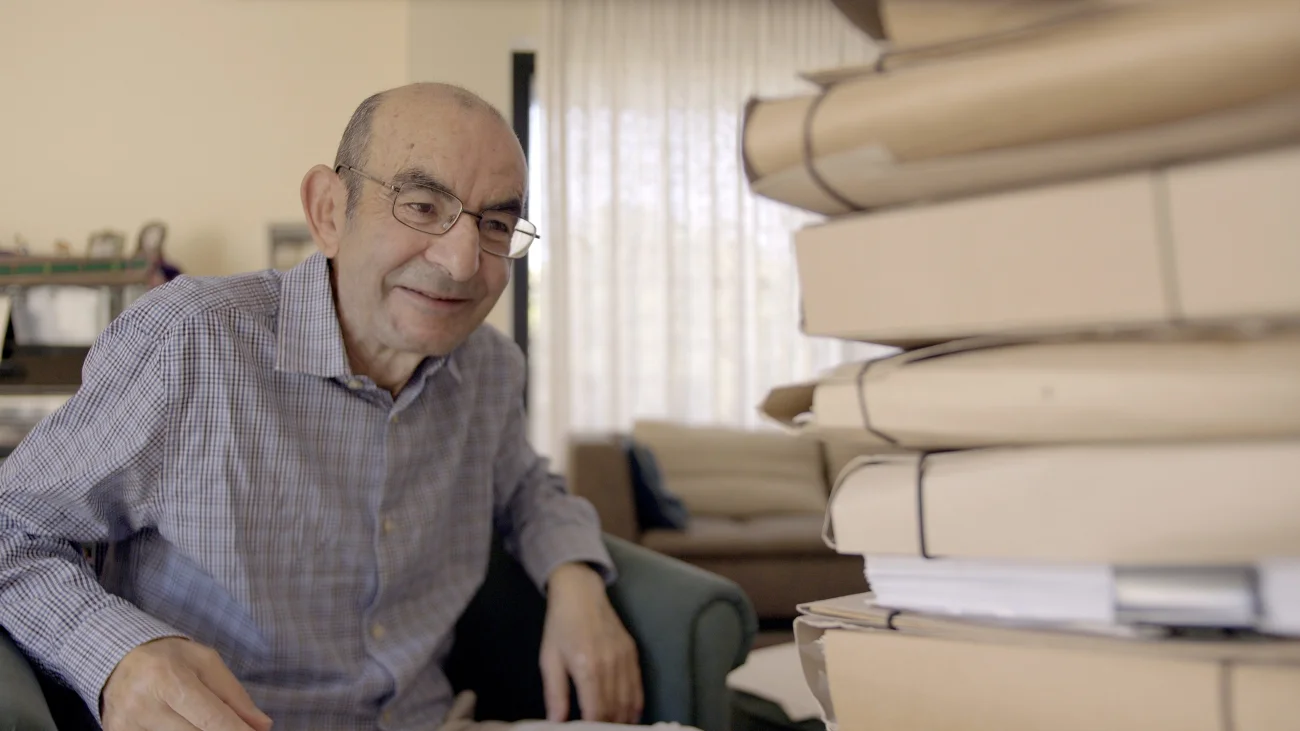
The annual March of Return, which typically draws tens of thousands of Palestinians inside Israel, was transformed this year into a series of smaller marches across depopulated Palestinian villages.
Despite restrictions imposed by Israeli police, hundreds of Palestinians took part in local tours to their destroyed villages to commemorate the Nakba, or catastrophe, which refers to the ethnic cleansing of Palestine by Zionist militias to make way for the creation of Israel in May 1948.
Through these events, Palestinians say they aim to reaffirm their identity amid what they describe as ongoing Israeli attempts to erase it.
Khaled Awad, spokesperson for the Association for the Defence of the Rights of the Internally Displaced, said discussions with Israeli authorities began around three months before the march.
He noted that police initially refused to engage with the organisers of the event and warned they could break it up if it went ahead.
Palestinian March of Return reshaped by Israeli restrictions
Israeli forces block Palestinian student protest after barring access to school
Israeli forces dispersed a student protest in the village of Umm al-Khair on Sunday, after barring Palestinian residents from accessing schools for over a week.
Khalil Hathaleen, a local education official and a parent of two students, told Middle East Eye that his children were among 55 students barred from schools for the second week.
Israeli troops, armed and accompanied by security dogs, were stationed alongside their vehicles at the protests, which were mostly attended by schoolchildren.
The demonstration was sparked after residents were prevented from accessing a vital road between Khirbet Umm al-Khair and the nearby village of Umm al-Khair, south of Hebron in the occupied West Bank. Dozens of students were left unable to attend school.
“Our message is clear, it is that today, they are attempting to take away our rights to education,” Hathaleen said.
“Our goal is clear in our demands to the right to education through safe routes to our children, a safe education and the end to demolitions in Khirbet Umm al-Khair.”
The main route connecting the village to external resources was first blocked over 10 days ago by settler leader Nivo, who holds a security role in the neighbouring Carmel settlement.
Trump officials consider sending 1,100 Afghans who aided US forces to Congo
The Trump administration is in discussions to potentially send up to 1,100 Afghans who helped US forces during the war in Afghanistan to the Democratic Republic of Congo (DRC), a non-profit confirmed on Tuesday.
The resettlement talks, first reported by the New York Times, come after Donald Trump’s decision to stop an initiative that allowed Afghans who assisted US war efforts to apply to resettle in the U.S.
This group of more than 1,000 Afghans, who have been waylaid in Qatar for a year, reportedly includes interpreters as well as relatives of US military members. The group also includes more than 400 children.
According to the Times, the US evacuated these Afghans to Qatar for their protection because they supported US military efforts in their home country, which, since the US military withdrawal, is once again under Taliban control.
The DRC, meanwhile, is suffering from an enormous displacement crisis following decades of conflict and instability. According to the UN Refugee Agency, 8.2 million people were displaced as of September 2025, with this number expected to reach 9 million by year’s end.
'When the killer cooks': Viral image shows Israeli soldier cooking in southern Lebanese home
The image of the female soldier smiling with ingredients spread across the table was shared on Sunday by Bint Jbeil News, a Lebanese publisher.
The image was reportedly taken in Bint Jbeil, the town in the Nabatiye governorate of southern Lebanon.
“Violation in its full ‘elegance’,” the publisher captioned the picture on Instagram. “When the killer and occupier cook in the kitchen of the land’s people.”
Diana Moukalled, a Lebanese journalist and filmmaker, said the image was an insult “to people’s memory [and] dignity”.Here we're talking about a house that still has its greenery, still has the life of its family, but they alone are the forcibly absent ones,” she wrote on X.
“They are forbidden from returning, while a soldier from the occupation army enters the place, picks the produce, cooks, and laughs as if the house has no owners.
'All changed with the genocide': Palestinian women and girls face brutal abuse in Israeli jails
Once you picture schoolgirls, university students, mothers, aunts and grandmothers lying on their stomachs in prison pyjamas - their hands tied behind their backs, and soldiers looming over them, beating them if they move even slightly - you cannot forget the image.
When you hear a female prisoner say she has "nothing but her heart", you immediately grasp how prison can dismantle lives.
Palestinian Prisoners’ Day is marked every year on 17 April to spotlight ongoing human rights violations - and today, conditions are worse than ever. Since the launch of the Gaza genocide, starvation, isolation, humiliation, strip searches, torture and overwhelming fear have become constant realities for Palestinian women in Israeli prisons.
More than 700 Palestinian women have been arrested in the occupied West Bank, East Jerusalem and Gaza since the genocide began in late 2023, according to rights groups. Enduring night raids on their homes or detention at military checkpoints, most have been subjected to physical and psychological abuse both during and after their arrest.
“Everything is different from the prisons of the 1990s. All changed with the genocide,” Ramallah-based lawyer Sahar Francis, who is also the former director of the prisoners’ rights group Addameer, told a recent webinar entitled Women, Prison Sumoud.
Gaza ‘heading towards famine’ as bread shortages deepen amid Israeli curbs
Significant shortages of bread and essential supplies, including food and fuel, have returned to the Gaza Strip as Israel continues to tighten restrictions on the entry of goods and aid.
In recent days, Palestinians in the enclave have been forced to queue for hours to obtain subsidised bundles of bread from the few bakeries still operating, each costing three shekels (around $1).
Free bread distributed by aid groups remains scarce and out of reach for many.
Residents also report rising vegetable prices, while eggs, chicken and meat have nearly disappeared from the market.
Sabreen Abu Ouda, a 45-year-old resident of Gaza City, said her family of 11 receives just one bundle of 10 loaves twice a week.
“When we receive a bag of bread, what does it amount to? One loaf per person? That is not enough, and we go days without bread,” she told Middle East Eye.
“As for vegetables, by God, we have not bought any since the end of Ramadan (on 18 March). We simply cannot afford their rising prices.”
How 51 Seconds at a Pro-Palestine Protest Could Send a Muslim Student to Prison for 34 years
The struggle over a fallen police barrier lasted less than a minute, but it has forever altered the course of student Muhammad Ali’s life.
On June 3, 2024, the 21-year-old University of Pittsburgh senior was protesting in support of a pro-Palestine encampment in the center of campus. University police had set up metal barriers, held together with zip ties, to keep protesters from delivering food, water, and supplies to the encampment. Frustrated, some protesters tried to move the barriers.
Ali bent down to pick up a fallen barrier. An officer grabbed the other side and tried to pull it from his hands. After a brief exchange of words, Ali let go and stepped back, his hands raised. He thought that was the end of it. Weeks later, Ali was charged with multiple crimes, including three felonies. The most serious charges against him carry a maximum sentence of 34 years in prison.
Ali’s attorney and supporters say he is being treated harshly because he is Muslim and brown. They point out that the Allegheny County District Attorney’s office filed criminal charges against other protesters, but nearly all of them were offered plea deals with lesser charges, or a pretrial rehabilitation program that if completed would leave them with no criminal record.
More Articles...
- Second Contractor Steps Forward to Blow the Whistle on Israeli Attacks at Gaza Aid Site
- ‘I wished for death’: Sexual violence in Israel’s prisons is an ‘organised state policy’
- Dressed for school, returned in a shroud: Israeli forces kill Palestinian girl in class
- Palestinian children's charity closes in wake of Israeli pressure
Page 1 of 202
Human Rights Glance