War Glance
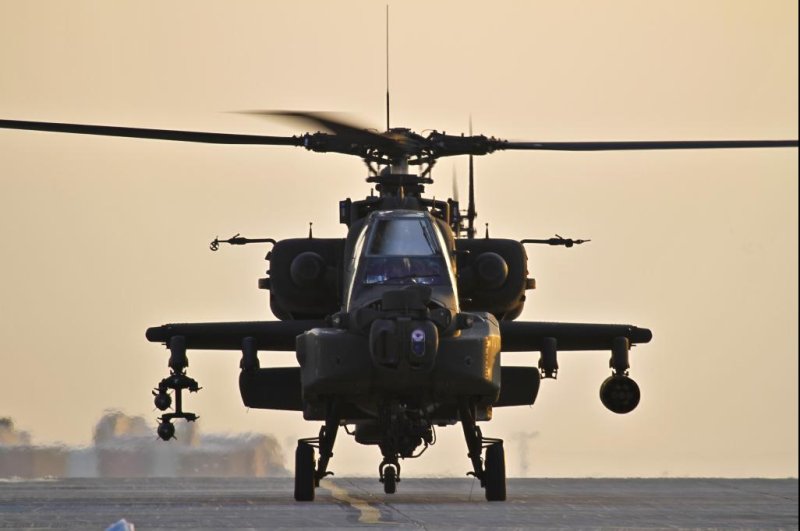 The United States and Russia dominated government-to-government arms transfer agreements with developing countries from 2011 to 2014.
According to the U.S. Congressional Research Service, arms transfer agreements with developing nations constituted 75.5 percent of all such agreements globally from 2011 to 2014, and 86.0 percent of agreements in 2014.
U.S., Russia dominate arms transfers to developing countries
Judge denies new trial bid for ex-US guards in Iraq shooting
A federal judge won't give a new trial to four former security contractors convicted in a mass shooting of Iraqi civilians in 2007.
U.S. District Judge Royce Lamberth denied the request in an order dated Tuesday, saying the "weight of evidence is heavily against the men."
The guards — State Department contractors for the Blackwater Worldwide security firm — were convicted last year in federal court and given long prison sentences in April.
The Intercept publishes secret military documents on drone killings
 Secret military documents published Thursday by The Intercept detail the extent to which the White House uses its drone program, citing an unnamed source who said he wanted to make the information available so that the public will know how the decisions to make the strikes happen.
Among the findings of the investigation: The Pentagon's Intelligence, Surveillance and Reconnaissance unit circulated a paper in 2013 that found that the drone strikes, or targeted killings, often rely upon shaky intelligence and when executed, often compromise further gathering of intelligence.
Top general on Afghan hospital raid: US brass behind decision to strike
 The top U.S. commander in Afghanistan, Gen. John Campbell, accepted the United States’ responsibility Tuesday for deadly airstrikes on an Afghan hospital in which 22 people were killed, stating that the attack was a “mistake” but that the ultimate decision to shell the facility was made by the U.S. chain of command.
“To be clear, the decision to provide aerial fire was a U.S. decision made within the U.S. chain of command,” he told a Senate committee on Tuesday. It came a day after the U.S. announced that the hospital was hit after a request from local forces, who claimed they were under fire from Taliban fighters at the medical center in the strategic northern city of Kunduz.
U.N.: Civilian casualties in Afghanistan reach record levels
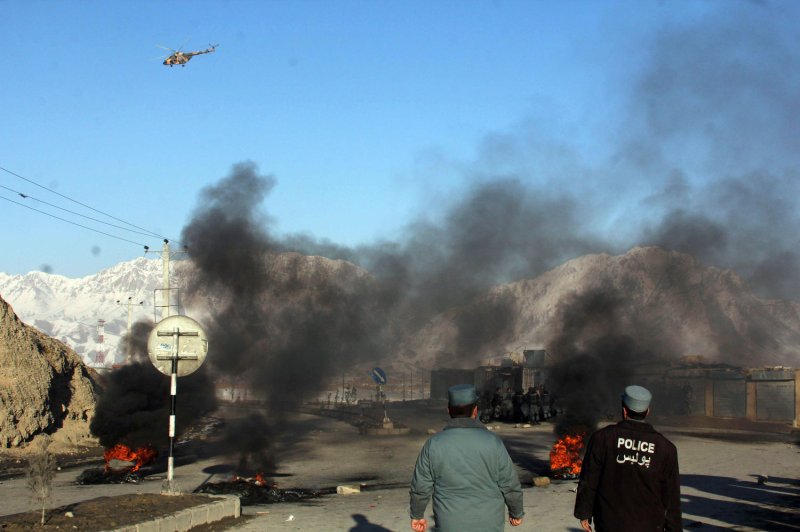 The number of women and children killed or injured through the year in Afghanistan increased by 23 percent and 13 percent, respectively, as overall casualties reached record levels.
There have been 4,921 civilian casualties -- 1,592 civilians killed and 3,329 wounded -- in Afghanistan from January until June, a one percent increase over last year's record, according to a report by the United Nations released Wednesday.
The Company Getting Rich Off the ISIS War
For the Middle East, the growth of the self-proclaimed Islamic State has been a catastrophe. For one American firm, it’s been a gold mine.
The war against ISIS isn’t going so great, with the self-appointed terror group standing up to a year of U.S. airstrikes in Syria and Iraq.
But that hasn’t kept defense contractors from doing rather well amidst the fighting. Lockheed Martin has received orders for thousands of more Hellfire missiles. AM General is busy supplying Iraq with 160 American-built Humvee vehicles, while General Dynamics is selling the country millions of dollars worth of tank ammunition.
Perpetual war creates endless consequences
When the outgoing chairman of the Joint Chiefs of Staff, Gen. Martin Dempsey, began this month by issuing a farewell report on U.S. military strategy, the gist was hardly big news. “Dempsey to Pentagon: Prepare for the Never-Ending War” read the headline on the cover page of the National Journal.
The “war on terror” now looks so endless that no one speculates anymore about when it might conclude. “This war, like all wars, must end,” President Barack Obama declared in a major speech more than two years ago. “That’s what history advises. That’s what our democracy demands.” But midway through 2015, this war seems as interminable as ever.
More Articles...
Page 8 of 118