Political Glance
 An armed man was arrested after charging toward the Democratic candidate for Ohio governor, Amy Acton, on Sunday during a campaign stop at the Canfield Fair, injuring several people, campaign officials said.
Acton was not injured, but campaign officials said multiple people were hurt.
The suspect, identified as Patrick Havas, 38, of Canfield, Ohio, "aggressively shoved his way through the crowd toward Acton while holding a cell phone up," Mahoning County Sheriff Jerry Greene told CBS News. While he was rushing forward, Havas allegedly knocked over two older people on mobility scooters, causing one of them to fall to the ground, Greene said.
Acton's security detail, made up of Ohio State Highway Patrol troopers, was able to stop him and take him into custody, the sheriff said.
The man had two pistols and brass knuckles on him, according to Greene, all of which are legal to carry in Ohio.
 Former Labor Secretary Lori Chavez-DeRemer allegedly fostered a “toxic, intimidating and humiliating” workplace when she led the department, a scathing watchdog report released Thursday found.
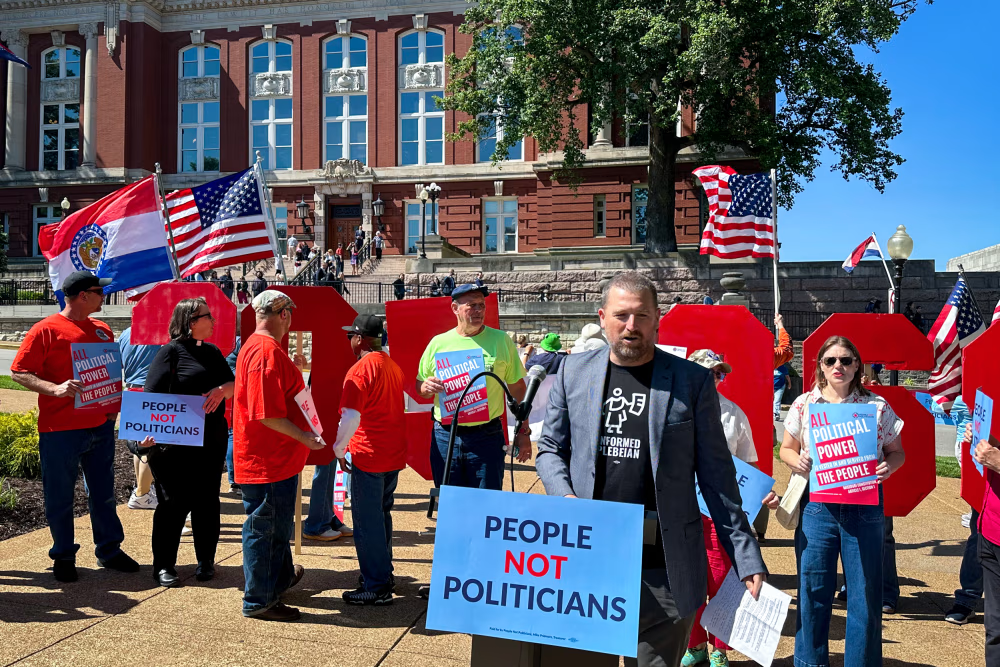 The Missouri Supreme Court ruled Thursday that the state’s redrawn congressional map cannot be used in this year’s midterm elections, dealing a major blow to Republicans.
 Aid experts have denounced the US’s “embarrassing” and “pitiful” initial response to the Nepal flood disaster after the US state department announced it was releasing $500,000 in emergency funds to help the relief effort.
 A Chinese immigrant was found dead just hours after being booked into immigration detention in a U.S. territory, according to U.S. Immigration and Customs Enforcement.
 A Utah judge ruled Tuesday that the man accused of killing Charlie Kirk must stand trial for aggravated murder, a felony charge that makes him eligible for the death penalty if convicted.