Science Glance
Scientists have named a newly discovered species of moth after Donald Trump. Researchers named the moth after the President-elect because the new moth, in adult form, boasts a series of yellowish-white scales on its head, resembling the hair of Trump.
The moth, Neopalpa donaldtrumpi, was formally introduced in the latest issue of the journal ZooKeys. It is one of two species within a genus of twirler moths.
N. donaldtrumpi and its relative are both found throughout Southern California, as well as across the border in Baja California, Mexico.
TVNL Comment: Poor little thing will have to go through all eternity with the name of a truly rare and scary species of humans.
 Some 252 million years ago, the planet suffered the most catastrophic mass extinction event in its 4.5 billion-year history.
 “We come in peace” might be the traditional opening gambit for aliens in science fiction, but we should be wary about beaming back a response to any advanced life-forms in real life, Stephen Hawking has warned.
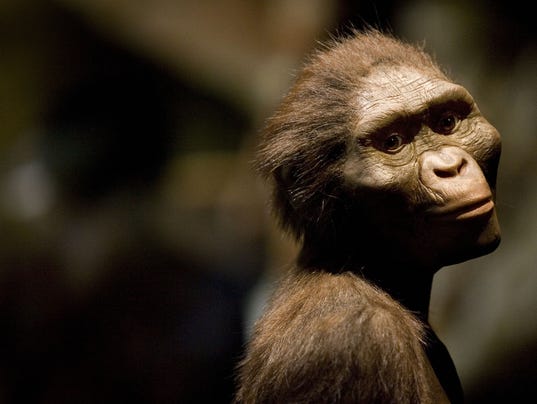 Talk about cracking a cold case: Nearly 3.2 million years ago, Lucy died. Now we may know how.
 For the first time, researchers have confirmed the astronomical accuracy of Britain's earliest stone structures. According to scientists at the University of Adelaide, the great circles traced the paths of the moon and sun at the time of their construction, 5,000 years ago.
 A team of scientists in England have found a better way to capture carbon from power plant emissions.