




 Coral reefs are dying, and scientists and governments around the world are contemplating what will happen if they disappear altogether. The idea positively scares them.
Coral reefs are part of the foundation of the ocean food chain. Nearly half the fish the world eats make their homes around them. Hundreds of millions of people worldwide - by some estimates, 1 billion across Asia alone - depend on them for their food and their livelihoods.
If the reefs vanished, experts say, hunger, poverty and political instability could ensue. "Whole nations will be threatened in terms of their existence," said Carl Gustaf Lundin of the International Union for the Conservation of Nature.
Death of coral reefs could devastate nations
T. Rex Ancestor’s Hip Found in Australia, Proving Life in South
 A dinosaur bone found in Australia belonged to an ancestor of Tyrannosaurus rex, according to a study that provides the first evidence that the fearsome predator’s predecessors lived in Southern continents.
The hip bone, which was found in Dinosaur Cove in Victoria state -- about 220 kilometers (136 miles) southwest of Melbourne -- was that of a tyrannosaur that lived about 110 million years ago, 40 million years before T. rex roamed the earth, researchers said in a Science study today.
The discovery disproves a previous theory that tyrannosaurs never lived in the Southern continents, and raises the question of why larger predators such as T. rex evolved only in the Northern hemisphere, said Roger Benson, a researcher at the University of Cambridge in the U.K. who led the study.
Sean Hannity’s Freedom CONcert Scam: Almost None of Charity’s $ Went to Injured Troops, Kids of Fallen Troops; G5s for Vannity?
 For the last several years, Sean Hannity and the Freedom Alliance “charity” have conducted “Freedom Concerts” across America. They’ve told you that they are raising money to pay for the college tuition of the children of fallen soldiers and to pay severely wounded war vets. And on Friday Night, Hannity will be honored with an award for this “Outstanding Community Service by a Radio Talk Show Host” at Talkers Magazine’s convention.
But it’s all a huge scam.
For two detainees who told what they knew, Guantanamo becomes a gilded cage
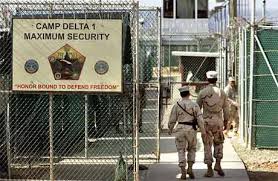 When it came to their initial treatment at Guantanamo, Sawah and Slahi had little in common, according to military officials. Their paths would intersect only later, when they both made the same choice: to cooperate with the United States.
Sawah, now 52, and Slahi, now 39, have become two of the most significant informants ever to be held at Guantanamo. Today, they are housed in a little fenced-in compound at the military prison, where they live a life of relative privilege -- gardening, writing and painting -- separated from other detainees in a cocoon designed to reward and protect.
But as the Obama administration attempts to close the prison, Sawah and Slahi are trapped in a gilded cage. Their old jihadi comrades want them dead, revenge for the apostasy, now well known, of working with the United States. The U.S. government has rewarded them for their cooperation but has refused to countenance their release.
Warned About Abuse, Vatican Failed to Defrock Priest
 Top Vatican officials — including the future Pope Benedict XVI — did not defrock a priest who molested as many as 200 deaf boys, even though several American bishops repeatedly warned them that failure to act on the matter could embarrass the church, according to church files newly unearthed as part of a lawsuit.
The internal correspondence from bishops in Wisconsin directly to Cardinal Joseph Ratzinger, the future pope, shows that while church officials tussled over whether the priest should be dismissed, their highest priority was protecting the church from scandal.
How some retired military officers became well-paid consultants
 Defense Secretary Robert Gates' top deputy will brief the Joint Chiefs of Staff today on his recommendations to regulate the Pentagon's practice of hiring retired senior officers to advise the military, Gates' spokesman said.
Gates ordered Deputy Secretary William Lynn in December to review the military's practice of paying retired officers hundreds of dollars an hour to act as "senior mentors," helping run war games and advising active-duty officers.
Lynn has completed the review and will present his recommendations to Gates, Adm. Michael Mullen, chairman of the Joint Chiefs of Staff, and the chiefs of the military services, Pentagon press secretary Geoff Morrell said.
Neither Neanderthal nor sapiens: new human relative Identified
 At a press conference yesterday, researchers announced the completely unexpected: a Siberian cave has yielded evidence of an entirely unknown human relative that appears to have shared Asia with both modern humans and Neanderthals less than 50,000 years ago.
The find comes courtesy of a single bone from individual's hand. Lest you think that paleontologists are overinterpreting a tiny fragment, it wasn't the shape of the bone that indicates the presence of a new species—it was the DNA that it contained.
The paper that describes the finding comes courtesy of the Max Planck Institute's Svante Pääbo, who has been actively pursuing the sequencing of the Neanderthal genome. It seems likely that this particular bone fragment was targeted due to suspicions that it might also provide an additional Neanderthal sequence.
UK: Israel behind passport forgery in Dubai killing
 There are "compelling reasons" to believe the Israeli government was responsible for forging British passports used in a plot to kill a Hamas leader in the United Arab Emirates earlier this year, British Foreign Secretary David Miliband said Tuesday.
New east Jerusalem homes approved hours before Netanyahu-Obama meet
 The Jerusalem municipality has given final approval to a group of settlers construct 20 apartments in a controversial hotel in east Jerusalem, Haaretz learned on Tuesday.
The announcement comes as Prime Minister Benjamin Netanyahu was in Washington smoothing over ties with the United States over the latest settlement-related tensions, and hours before the premier was to meet with President Barack Obama in Washington.
The Shepherd Hotel in the Sheikh Jarrah neighborhood was purchased by American Jewish tycoon Irving Moskowitz in 1985 for $1 million. Moskowitz, an influential supporter of Ateret Cohanim and heightened Israeli settlement in East Jerusalem, plans to tear down the hotel and build housing units for Jewish Israelis in its place.
Page 829 of 1167