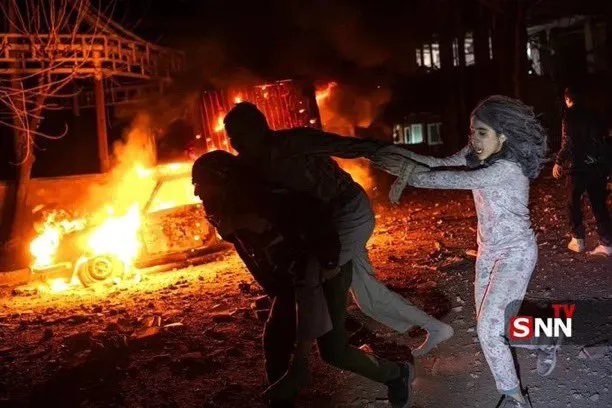
 As groups of families and others gathered Sunday evening at cafes around Niloofar Square—a middle-class area in eastern Tehran—after breaking their fast for Ramadan, a series of explosions struck the area, leveling several buildings and killing over 20 people, according to witnesses at the scene and later reports from local news sources.
Witnesses who spoke to Drop Site said two explosions hit the area—a smaller strike in the vicinity, followed by a larger one that devastated much of the neighborhood, a tactic known as a “double tap” strike that is used to inflict maximum casualties.
Videos of the immediate aftermath of the attack showed several individuals dead and wounded as well as massive destruction on the street outside. In Cafe Ahla, next to the square, blood and debris soaked the floors. Several patrons who had been sitting there when the attack struck could be seen dead on the floor or with their mutilated bodies still sprawled across their seats.
“We were sitting here around 8:00-8:30 p.m. and suddenly there was the noise and explosion. We got up and a few people ran away. We turned around to get our belongings and we saw that blood was spraying everywhere. Someone’s hand had fallen on the floor, a head had fallen on the floor,” said Shahin, a witness who had been at the cafe and asked to be identified by first name only. “There were scalps torn off, hands severed, a few people were laying here all cut up and two people were martyred.”
As has been the case with nearly all of the bombings in Iran, it remains unclear whether this attack was carried out by the U.S. or Israel. Israel has used “double tap” strikes in Gaza, Lebanon, and elsewhere. In one prominent incident, the Israeli military killed 22 Palestinians, including five journalists, in a double tap strike on Nasser Hospital in Khan Younis in August. The U.S. repeatedly engaged in double tap strikes during the so-called “War on Terror” in Pakistan, Afghanistan and Yemen and, most recently, in a September 2025 attack on an alleged Venezuelan drug smuggling boat in the Caribbean.
More...






 President Donald Trump announced March 5 he was replacing Homeland Security Secretary Kristi Noem after lawmakers grilled her this week about a $220 million ad campaign that featured her prominently.
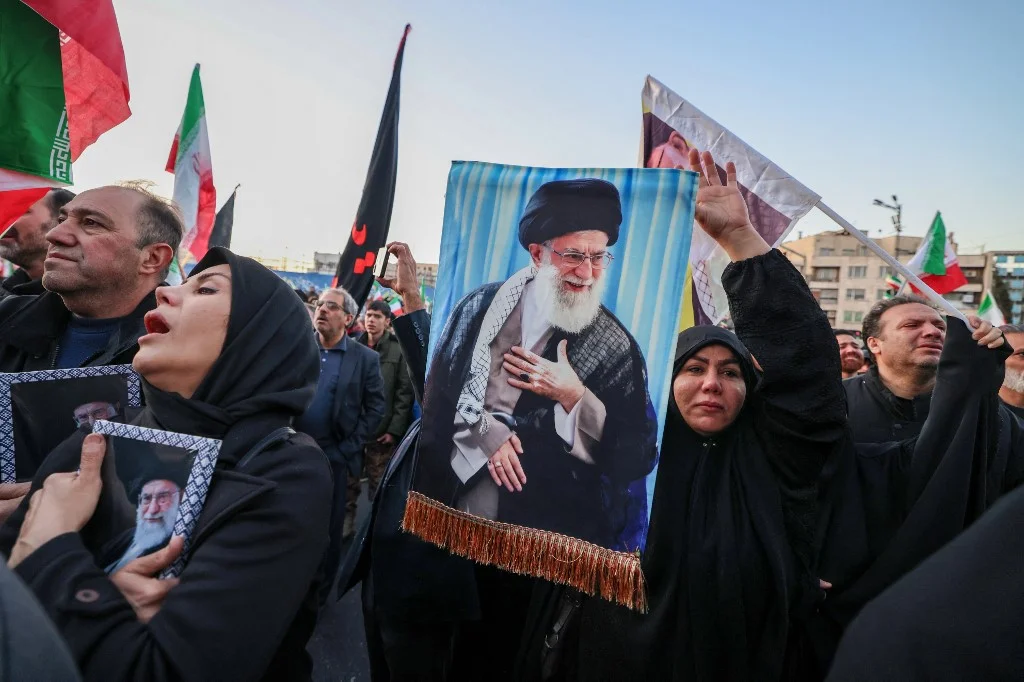 “On the US calendar it’s still March 4,” Jabbarli said, “but so much happens in a single day that sometimes it would normally take months or years.”
 State Rep. James Talarico defeated U.S. Rep. Jasmine Crockett of Dallas in the Texas Senate primary Tuesday, March 3 in a battle of two national Democratic rising stars.
 Israel closed all crossings into Gaza indefinitely when it attacked Iran, imposing a siege that has already pushed up food prices and threatens to plunge 2 million people into a new hunger crisis.
 US President Donald Trump said his “biggest surprise” since unleashing a war in the Middle East has been Iran’s attacks on the Arab Gulf states, which the US counts as some of its closest and richest partners.