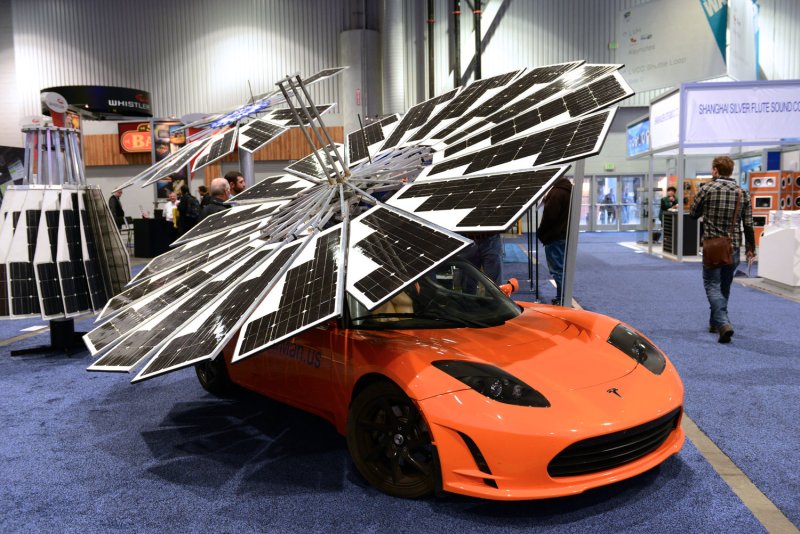
 A small number of vehicles on U.S. roads are already indirectly powered by the sun. Ostensibly, some of America's electric cars use power derived from solar panels. And the fuel cells that bolster a growing fleet of hybrid cars and buses rely on hydrogen converted by photovoltaic cells.
But America is a liquid fuel kind of nation. To help wean American's off their love of gasoline, researchers at Harvard have found a way to turn solar energy into liquid fuel. It's like gas -- only good for the environment.
The liquifying process relies on bacteria. After a sort of a artificial leaf -- similar to a photovoltaic cell -- splits the absorbed sunlight into hydrogen and oxygen, a lab-engineered bacterium (Ralstonia eutropha) is introduced. The bacteria combines the hydrogen with carbon dioxide to create a liquid fuel called isopropanol.
The unique approach combines the powers of an inorganic catalyst with a biological system -- the integration of human engineering with the biological wonders of the natural world.
 A North Dakota judge has said he will order Greenpeace to pay damages expected to total...
 Donald Trump has vented his fury against a green energy deal between the British government and...
 The Trump administration has overhauled a set of nuclear safety directives and shared them with the...