The 2014 pullout of U.S.-led combat troops from Afghanistan appears to be having a major impact on the country's narcotics trade, with opium poppy cultivation growing to a record high this year, according to a U.N. report released Wednesday.
The boom underscores the failure of U.S.-led international efforts to fight opium poppy cultivation that have cost U.S. taxpayers some $4.42 billion since 2002. Afghanistan remains the world's largest producer of opium, which contains morphine, the alkaloid from which heroin is produced.
The narcotics trade is a key driver of official corruption and a major source of income for the Taliban-led insurgency. Various estimates put the amount of money earned annually by the insurgency from the narcotics economy at between $70 million and $400 million.
In its annual survey of opium poppy cultivation in Afghanistan, the U.N. Office of Drugs and Crime and the Afghan Ministry of Counter Narcotics charted a 36 percent increase this year to a record 209,000 hectares, up from 154,000 hectares in 2012. The previous high was 193,000 hectares in 2007.
 Lebanese farmer Saleh* woke up before dawn on 3 September to harvest his fig trees in...
 The acting U.S. Navy secretary Hung Cao said that the Iranian military severely damaged a major...
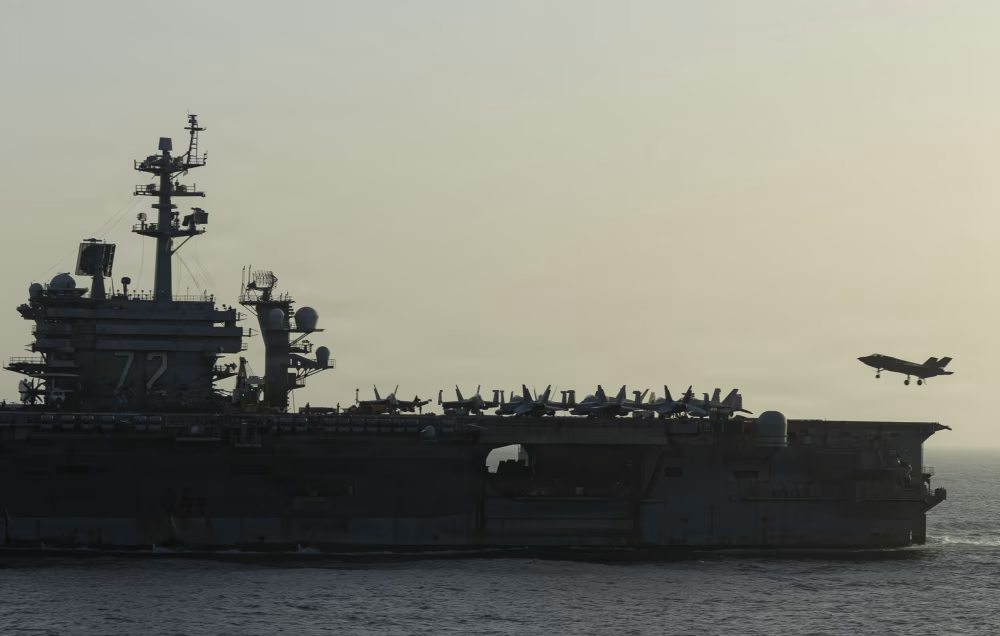 Iran said Sunday it struck an unmanned U.S. vessel trying to enter the Strait of...