 Two American doctors whose work over four decades has revealed how the body responds to the smells, sights, flavours and threats of the outside world have won this year's Nobel prize in chemistry.
Robert Lefkowitz at Duke University in Durham, North Carolina, and Brian Kobilka at Stanford University in Palo Alto, California, share science's most prestigious award – and 8m Swedish kronor (£744,000) – for their discovery of molecular sensors called G-protein-coupled receptors or GPCRs.
The sensors take the form of proteins that act as gatekeepers between cells and the environment they live in. When a substance latches on to the outer part of a sensor protein, it causes it to change shape, triggering a response inside the cell.
Scientists now know of a whole family of GPCRs that detect hundreds of different substances in and around the body. Work on the receptors has underpinned decades of progress in medicine, with half of all pharmaceuticals acting on the proteins.
 Down a short gravel track in a largely nondescript corner of Louisiana sits a gas processing...
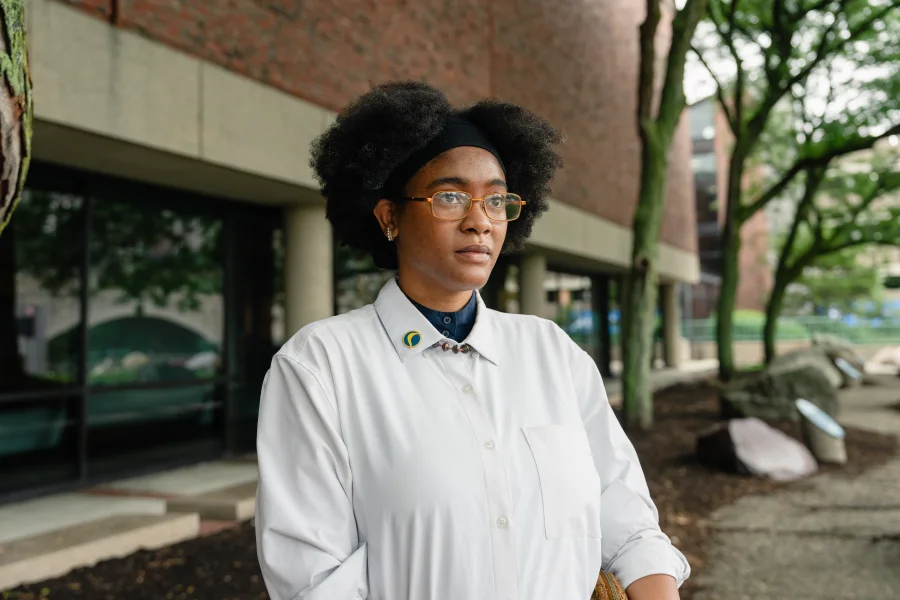 Netia McCray recalls how excited she was to join the federal advisory committee on long COVID...
 A 10,000 year-old tooth in remarkable condition from an ancient Pacific mastodon, a large mammal that...
 The universe is a strange place — filled with exploding stars, ancient galaxies, and unseen worlds....