Every morning, university professor Hassan El-Nabih straps his briefcase and laptop to his bicycle and rides out in search of a place with electricity and an internet connection, hoping to reach his students online.
Before Israel’s genocidal war on Gaza, a professor on a bicycle was not a common sight. Today, it has become a reality imposed by the war – a practical option, one of the only options, given damaged infrastructure and decimated public transport.
“My car was severely damaged in December 2023 while it was parked in the Shujayea neighbourhood [of Gaza City],” El-Nabih said.
“I was visiting relatives when an Israeli air strike struck a nearby building … shattering both windscreens and crippling the engine. With my car unusable and fuel almost impossible to find, I had to adapt.”
The genocidal war has severely damaged the besieged enclave’s transport infrastructure, with total losses estimated at roughly $2.5bn. A joint report by the World Bank, the European Union and the United Nations found that about 81 percent of Gaza’s road network has been damaged or destroyed, leaving many areas isolated and basic transport services largely suspended.
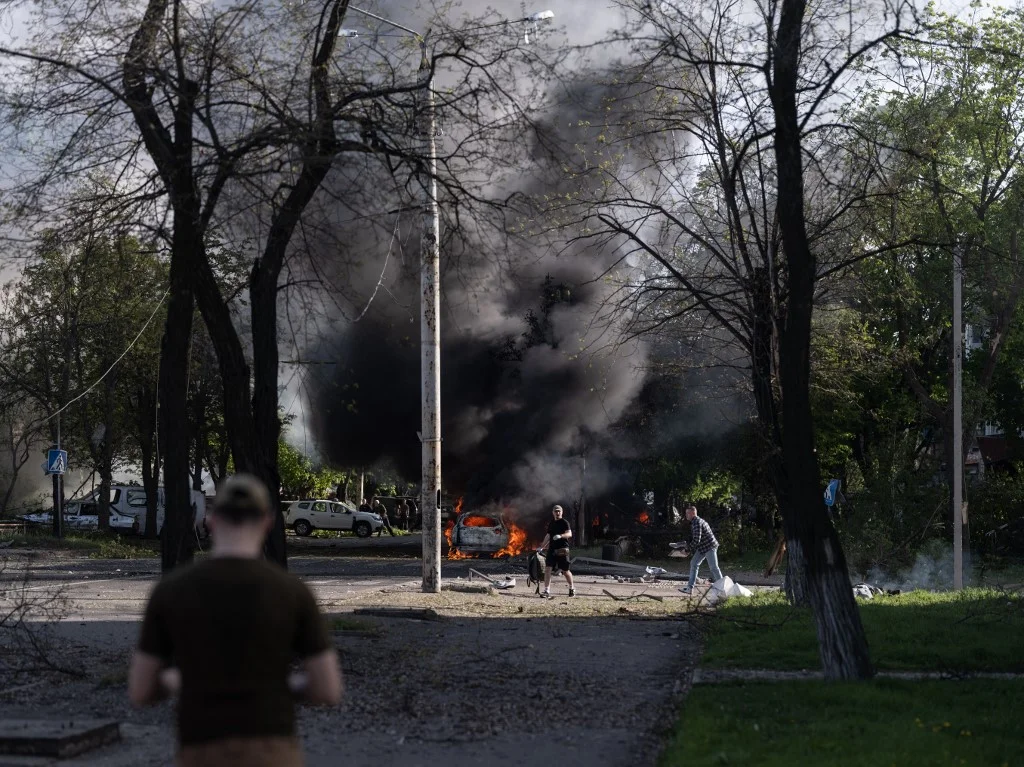 Russian attacks killed 22 people in cities across Ukraine on Tuesday, as President Volodymyr Zelensky condemned...
 Russia’s Defense Ministry announced a unilateral truce for Victory Day, declaring a pause in fighting from...
 Ukraine on Sunday launched a wave of strikes against Russian oil targets, hitting a key loading...