Katharina Fabricius plunged from a dive boat into the Pacific Ocean of tomorrow. She kicked through blue water until she spotted a ceramic tile attached to the bottom of a reef.
A year earlier, the ecologist from the Australian Institute of Marine Science had placed this small square near a fissure in the sea floor where gas bubbles up from the earth. She hoped the next generation of baby corals would settle on it and take root.
Fabricius yanked a knife from her ankle holster, unscrewed the plate and pulled it close. Even underwater the problem was clear. Tiles from healthy reefs nearby were covered with budding coral colonies in starbursts of red, yellow, pink and blue. This plate was coated with a filthy film of algae and fringed with hairy sprigs of seaweed.
Instead of a brilliant new coral reef, what sprouted here resembled a slimy lake bottom.
Isolating the cause was easy. Only one thing separated this spot from the lush tropical reefs a few hundred yards away.
Carbon dioxide.
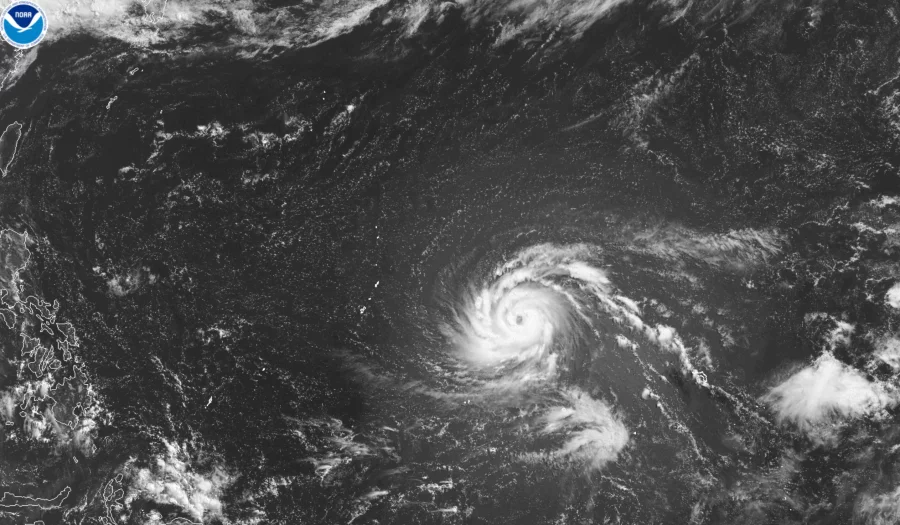 Super Typhoon Bavi is bringing intense winds to the remote U.S. territories of Guam and the...
 Floodwaters tore through Kentucky neighborhoods, damaging homes and streets as photos capture the aftermath.
Floodwaters tore through...
Floodwaters tore through Kentucky neighborhoods, damaging homes and streets as photos capture the aftermath.
Floodwaters tore through... A “prolonged, dangerous heatwave” was sweeping across parts of the central and eastern United States on...
 Hundreds of firefighters in Utah have struggled to suppress a wildfire that scorched an additional 20,000...