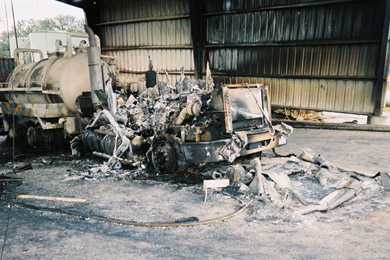
 On a cold, overcast afternoon in January 2003, two tanker trucks backed up to an injection well site in a pasture outside Rosharon, Texas. There, under a steel shed, they began to unload thousands of gallons of wastewater for burial deep beneath the earth.
The waste – the byproduct of oil and gas drilling – was described in regulatory documents as a benign mixture of salt and water. But as the liquid rushed from the trucks, it released a billowing vapor of far more volatile materials, including benzene and other flammable hydrocarbons.
The truck engines, left to idle by their drivers, sucked the fumes from the air, revving into a high-pitched whine. Before anyone could react, one of the trucks backfired, releasing a spark that ignited the invisible cloud.
Fifteen-foot-high flames enveloped the steel shed and tankers. Two workers died, and four were rushed to the hospital with burns over much of their bodies. A third worker died six weeks later.
What happened that day at Rosharon was the result of a significant breakdown in the nation’s efforts to regulate the handling of toxic waste, a ProPublica investigation shows.
 New York City’s top watchdog agency has hired a team of lawyers to investigate exactly what...
 Earth cooked to its hottest month on record in August, blowing far past a key climate...